
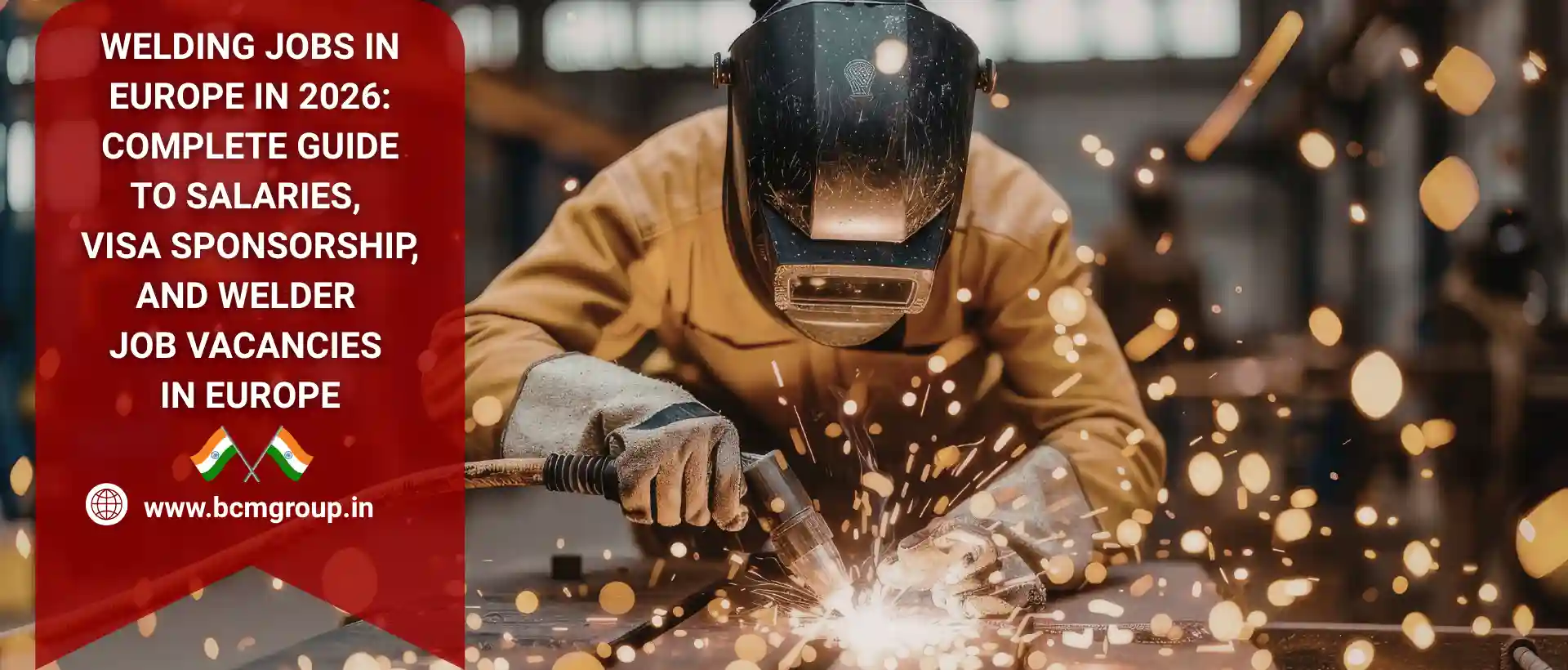
The demand for welding jobs in Europe continues to grow as industries across the continent face shortages of skilled tradespeople. From automotive manufacturing and construction to shipbuilding and renewable energy projects, employers are actively recruiting experienced welders to support ongoing industrial growth.
For skilled workers seeking international career opportunities, welder jobs in Europe offer attractive salaries, long-term employment prospects, modern working environments, and opportunities for visa sponsorship. Many European countries are struggling to fill welding positions locally, creating opportunities for qualified professionals from around the world.
Whether you specialize in MIG welding, TIG welding, pipe welding, structural welding, or industrial fabrication, Europe offers thousands of vacancies across multiple sectors.
This comprehensive guide explains everything you need to know about welding jobs Europe, including salaries, demand, top hiring countries, career opportunities, and the qualifications employers look for when hiring international welders.
If you are looking for welder job vacancies in Europe, this guide covers everything you need to know, including salary expectations, qualifications, top hiring countries, and the step-by-step application process.
Yes. Welding remains one of the most sought-after skilled trades across Europe. The combination of an aging workforce, increasing infrastructure investments, manufacturing growth, and renewable energy projects has created strong demand for qualified welders.
Many companies regularly advertise welder job vacancy in Europe opportunities for international workers because local labor shortages make recruitment increasingly difficult.
Depending on the country, experience level, and specialization, welders can earn between €900 and €8,000+ per month, with offshore, pipe, and specialized industrial welders often receiving the highest salaries.
Countries currently offering strong opportunities include:
💸 Salary: €700 – €1,000 Gross/Month
📍 Location: Slovenia
🕒 Working Hours: 8 Hrs/Day + Overtime
🧑🏭 Experience: 2–4 Years Required
🗣️ Language: Basic English
💸 Salary: €700 – €1,000 Gross/Month
📍 Location: Dublin, Ireland
🕒 Working Hours: 8 Hrs/Day
🧑🏭 Experience: 3–5 Years Required
🗣️ Language: English
💸 Salary: €700 – €1,000 Gross/Month
📍 Location: Stuttgart, Germany
🕒 Working Hours: 8 Hrs/Day
🧑🏭 Experience: 3–6 Years Required
🗣️ Language: Basic English
💸 Salary: €700 – €1,000 Gross/Month
📍 Location: Stavanger, Norway
🕒 Working Hours: Rotational Shift
🧑🏭 Experience: 5+ Years Required
🗣️ Language: English
💸 Salary: €700 – €1,000 Gross/Month
📍 Location: Rotterdam, Netherlands
🕒 Working Hours: 8–10 Hrs/Day
🧑🏭 Experience: 3–6 Years Required
🗣️ Language: English
💸 Salary: €700 – €1,000 Gross/Month
📍 Location: Stuttgart, Germany
🕒 Working Hours: 8 Hrs/Day
🧑🏭 Experience: 3–6 Years Required
🗣️ Language: Basic English
💸 Salary: €700 – €1,000 Gross/Month
📍 Location: Bucharest, Romania
🕒 Working Hours: 8 Hrs/Day
🧑🏭 Experience: 1–3 Years Required
🗣️ Language: Basic English
💸 Salary: €700 – €1,000 Gross/Month
📍 Location: Bratislava, Slovakia
🕒 Working Hours: 8 Hrs/Day + Overtime
🧑🏭 Experience: 5+ Years Required
🗣️ Language: Basic English
💸 Salary: €700 – €1,000 Gross/Month
📍 Location: Stockholm, Sweden
🕒 Working Hours: 8 Hrs/Day
🧑🏭 Experience: 3–6 Years Required
🗣️ Language: English
💸 Salary: 8,500 PLN gross/month .
📍 Location: Bucharest, Romania
🕒 Working Hours: 8 Hrs/Day
🧑🏭 Experience: 1–3 Years Required
🗣️ Language: Basic English
💸 Salary: €2,200–€2,600 P.A.
📍 Location: Bratislava, Slovakia
🕒 Working Hours: 8 Hrs/Day + Overtime
🧑🏭 Experience: 5+ Years Required
🗣️ Language: Basic English
💸 Salary: 36,700–36,800 SEK/month gross
📍 Location: Stockholm, Sweden
🕒 Working Hours: 8 Hrs/Day
🧑🏭 Experience: 3–6 Years Required
🗣️ Language: English
💸 Salary: €700 – €1,000 Gross/Month
📍 Location: Hamburg, Germany
🕒 Working Hours: 8–10 Hrs/Day
🧑🏭 Experience: 4–8 Years Required
🗣️ Language: English/German
💸 Salary: €700 – €1,000 Gross/Month
📍 Location: Split, Croatia
🕒 Working Hours: 8 Hrs/Day
🧑🏭 Experience: 2–4 Years Required
🗣️ Language: Basic English
💸 Salary:€700 – €1,000 Gross/Month
📍 Location: Riga, Latvia
🕒 Working Hours: 8 Hrs/Day
🧑🏭 Experience: 4+ Years Required
🗣️ Language: Basic English
💸 Salary: €700 – €1,000 Gross/Month
📍 Location: Tallinn, Estonia
🕒 Working Hours: 8 Hrs/Day
🧑🏭 Experience: 2–5 Years Required
🗣️ Language: English
💸 Salary:€700 – €1,000 Gross/Month
📍 Location: Copenhagen, Denmark
🕒 Working Hours: 8–10 Hrs/Day
🧑🏭 Experience: 4+ Years Required
🗣️ Language: English
💸 Salary: €700 – €1,000 Gross/Month
📍 Location: Berlin, Germany
🕒 Working Hours: 8 Hrs/Day
🧑🏭 Experience: 4+ Years Required
🗣️ Language: English
Several factors are driving demand for welders across Europe.
Many experienced welders are reaching retirement age, leaving employers with fewer skilled workers available to replace them.
Europe remains a global leader in manufacturing. Industries such as automotive production, machinery manufacturing, and metal fabrication continue to expand and require qualified welders.
Governments across Europe continue investing in major infrastructure projects, including:
These projects create thousands of opportunities for skilled welders.
Europe’s transition toward renewable energy has increased demand for welders in:
Many employers struggle to find qualified local workers, leading them to recruit internationally for welder jobs Europe.
Romania continues to develop its industrial and manufacturing sectors, creating opportunities for skilled welders.
Slovakia’s automotive industry drives significant demand for skilled welders, skilled trades, and technical professionals.
Slovenia offers quality employment opportunities within engineering and manufacturing sectors and logistics support.
Croatia continues to invest in construction and shipbuilding projects, infrastructure expansion, and coastal development initiatives.
Latvia has growing demand for welders in manufacturing and metalworking industries and industrial fabrication.
Estonia’s industrial growth continues creating opportunities for welding professionals, skilled technicians, and engineers.
Country | Average Monthly Salary |
Estonia | €700 – €1,000 |
Slovenia | €700 – €1,000 |
Poland | €700 – €1,000 |
Slovakia | €700 – €1,000 |
Croatia | €700 – €1,000 |
Latvia | €700 – €1,000 |
Romania | €700 – €1,000 |
Important: Salaries vary depending on experience, certifications, employer, overtime opportunities, and industry specialization.
MIG welding is one of the most commonly requested skills by European employers.
MIG welders are in demand across construction and manufacturing industries.
TIG welding requires precision and technical expertise.
Because of the advanced skill level required, TIG welders often receive higher salaries.
Pipe welding remains one of the highest-paying welding specializations.
Many employers advertising welder job vacancy in Europe opportunities specifically seek experienced pipe welders.
Structural welders play an essential role in infrastructure and construction projects.
Demand remains strong throughout Europe due to ongoing development projects.
Shipbuilding remains a major source of welding employment.
Countries such as Norway, Croatia, and the Netherlands frequently recruit experienced shipyard welders.
European employers generally seek candidates with a combination of technical expertise and workplace skills.
Candidates with multiple certifications and industry experience typically enjoy the strongest employment prospects.
One of the most important factors for international applicants searching for welding jobs in Europe . Many European employers actively hire Indian welders due to skilled labor shortages, but candidates must meet legal work permit requirements.
Most countries in Europe offer some form of skilled worker visa for welders.
Yes. Many companies offering welder job vacancy in Europe listings provide sponsorship if the candidate is skilled and experienced.
Understanding the correct application process is essential to avoid scams and improve selection chances.
Your CV should include:
Required documents:
To find welding jobs Europe, use Official Job Portals:
Company Websites:
Large employers often post vacancies directly.
Recruitment Agencies:
Specialized agencies Like BCM Group handle overseas welding recruitment.
Most employers conduct:
Once selected:
Recruitment agencies play a major role in international hiring.
Avoid agencies that: ऐसी एजेंसियों से सावधान रहें जो :
BCM Group is a professional overseas recruitment agency that helps skilled workers find genuine wealding jobs in Europe with verified employers. The company connects candidates with real welder job vacancies in europe across countries like Germany, Netherlands, Norway, Poland, Romania, Slovakia, and more.
If you are searching for a secure and trusted way to get a welder job vacancy in Europe, BCM Group provides end-to-end support including job matching, interview coordination, trade test assistance, and visa guidance.
BCM Group helps skilled welders build a stable international career by connecting them with real welding jobs Europe opportunities in industrial, construction, and manufacturing sectors.
👉 Apply through BCM Group to start your journey toward a welding career in Europe and getting your dream welding jobs europe .
We've formed major connections with top multinational corporations and Indian organizations, bolstering our name in the recruitment sector.
Comprises of highly motivated and experienced individuals, providing our clients quality hires and the highest quality of services at the lowest cost.
Across the globe to ensure coordination between applicants and clients. We go beyond typical functions to complete vacancies in the shortest time.
Streamlined Scheduling: A process for maintaining the schedules of both the company and the applicant in a professional and time-bound manner.
Hotel reservations, local transportation, practical exam arrangements, interview conduct, and so on are all handled professionally in India.
We cherish our relationships; by maintaining positive relationships between the workforce and the recruiter organization, we assist our clients in overcoming bureaucratic obstacles.
Understanding salary structure helps you evaluate offers properly.
Many European countries offer:
Certifications are one of the most important ranking and hiring factors for welders.
Common Certifications:
Most widely accepted welding certification in Europe
European welding standards
Recognized globally, especially in industrial sectors
Available, but the majority have suffered simply
Certified welders:
Focus on:
Certified welders are more likely to:
Do not rely on one source. Use:
Even basic English improves:
European employers prefer candidates with:
The demand for wealding jobs in Europe continues to grow rapidly as industries across the continent struggle with a shortage of skilled workers. From Germany and Norway to Poland, Romania, Slovakia, and Estonia, opportunities exist for qualified welders across multiple sectors.
For international job seekers, welder jobs in Europe offer a strong combination of:
However, success depends on proper preparation, including:
If you are searching for a welder job vacancies in Europe, focusing on skill development and applying strategically can significantly increase your chances of selection.
To get welder job europe, candidates must have welding experience, relevant certifications, and a job offer from a European employer. After receiving an offer, the employer often assists with work permit and visa sponsorship.
Yes. Many European countries actively hire indian welders due to labor shortages, especially in Germany, Norway, Netherlands, and Poland.
Pipe welders, offshore welders, and TIG welders earn the highest salaries, especially in Norway and Western Europe.
Yes. Many European companies provide visa sponsorship for skilled welders with experience and certifications.
Yes. Welding job in Europe are in high demand due to skilled labor shortages, infrastructure development, and manufacturing growth.
Norway, Germany, and the Netherlands generally offer the highest salaries for welders, especially in offshore and industrial sectors.
Yes. Many European employers hire Indian welders and provide visa sponsorship for skilled candidates.
Salaries typically range from €900 to €8,000+ per month, depending on country, experience, and specialization.
Commonly accepted certifications include:
Many employers provide:
Avoid companies that:
Europe often offers:
[contact-form-7 id=”d2f63f9″ title=”Candidate Form”]
[contact-form-7 id=”3b2dcad” title=”Employer Form”]
License Number: MUMBAI/PARTNERSHIP/5493853/2021
Address: 409, 4th Floor, Amanora Chambers, Amanora Mall, Near Magarpatta City, Hadapsar, Pune – 411028
For Candidates: +919555446699
Start Your Hiring Journey: info@bcmgroup.in
For Employer: +371 67717876
© 2024–2025 bcmgroup. All rights reserved.
Privacy Policy | About Us | Contact Us | Submit Your CV | Submit Your Requirements
