Serbia Workforce Market Overview & Labour Challenges
Serbia is a landlocked country located in Southeast Europe, in the central part of the Balkan Peninsula. It has a population of around 6.6 million people and its capital city is Belgrade, one of the largest cities in the region. Serbia has a strategic geographic position, connecting Central Europe with Southern and Eastern Europe, which supports trade and logistics activities. The country has a diversified economy driven by manufacturing, agriculture, automotive, IT, and construction sectors. Serbia is not a member of the European Union, but it is an EU candidate country and follows many EU labor and business regulations. In recent years, Serbia has faced labor shortages in skilled and semi-skilled occupations, leading employers to increasingly hire foreign workers.
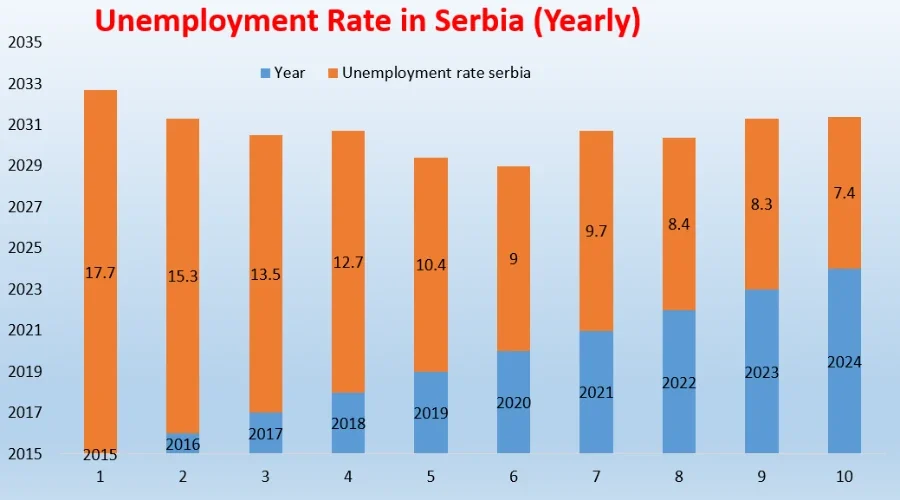
Serbia Unemployment rate (Yearly)
The unemployment rate in Serbia has shown a steady and long-term decline from 2015 to 2024, falling from 17.7% in 2015 to 7.4% in 2024. This improvement reflects economic recovery, foreign investments, and growth in sectors such as manufacturing, construction, and IT. However, short-term increases, such as in 2021, were influenced by the COVID-19 pandemic and global economic disruptions. Despite lower unemployment, many Serbian employers still face hiring difficulties due to a shortage of skilled and experienced workers in the local labor market.
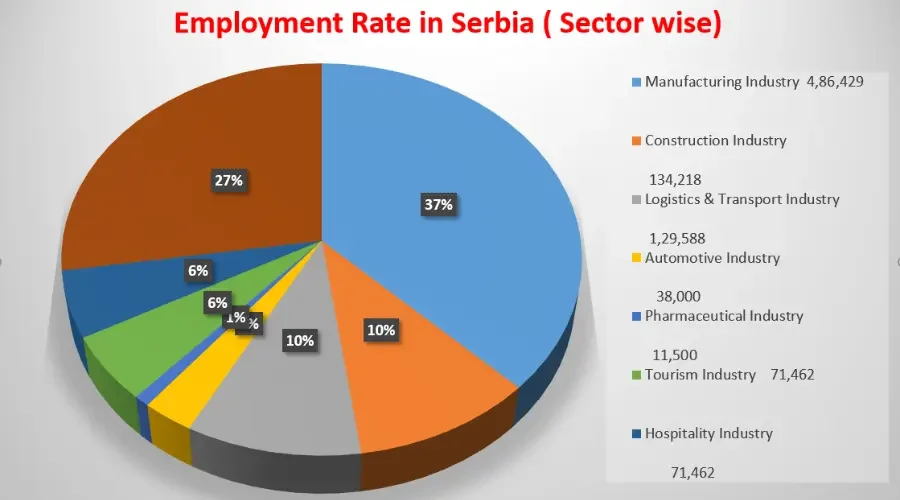
Serbia Employment rate industry wise
The employment distribution across major industries in Serbia clearly shows a strong concentration in a few key sectors. The manufacturing industry is the largest employer, accounting for 37.47% of total employment with over 486,000 workers, highlighting its role as the backbone of Serbia’s economy. The wholesale and trade sector follows closely with 27.43%, reflecting strong domestic consumption and cross-border trade activity. The construction industry employs 10.33% of the workforce, driven by infrastructure projects and real estate development.
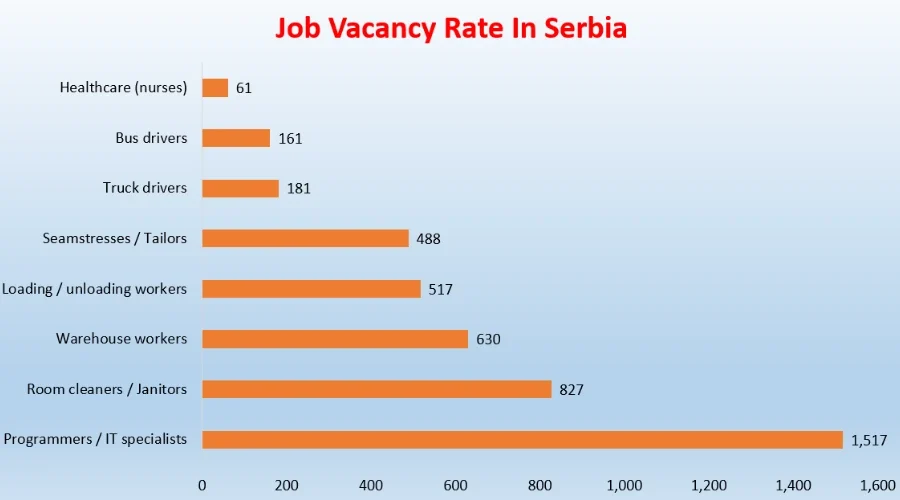
Serbia Job Vacancy rate (Job Profile)
The job vacancy data highlights the most in-demand occupations in Serbia, reflecting both skill shortages Programmers and IT specialists lead with 1,517 vacancies, driven by digital transformation and the expansion of the tech sector. High demand is also seen in room cleaners and janitors (827 vacancies), indicating strong activity in hospitality, healthcare, and facility management. Warehouse workers (630) and loading/unloading workers (517) are in demand due to growth in logistics, e-commerce, and distribution hubs. The textile sector continues to require labor.
Employer Pain Points in Serbia Labour Market
Complex Work Permit & Visa Procedures: The process of obtaining work permits and residence visas can be time-consuming and bureaucratic, causing hiring delays.
Language Barriers: Many international workers do not speak Serbian, which affects workplace communication, safety instructions, and team coordination.
Recognition of Qualifications: Difficulty in verifying or officially recognizing foreign diplomas, certifications, and professional experience.
Cultural Differences: Differences in work culture, communication style, and expectations can lead to misunderstandings or lower team cohesion.
Legal and Compliance Risks: Employers must strictly follow Serbian labor laws, immigration rules, tax regulations, and social security requirements—errors can result in penalties.
Higher Administrative Costs: Additional expenses for legal support, documentation, translations, relocation, and compliance management.
How BCM Group Helps Your Business
End-to-End Recruitment Support: BCM Group helps employers source qualified and job-ready international workers tailored to industry needs (construction, manufacturing, logistics, hospitality, etc.), reducing skill gaps and hiring time.
Work Permit & Visa Assistance: BCM Group manages the entire immigration process, including: Work permits, Temporary residence permits, Documentation and submissions.This reduces delays, errors, and compliance risks for employers.
Pre-Screening & Skill Verification: BCM Group conducts: Skill assessments, Background checks, Experience verification, ensuring candidates meet Serbian employer standards before deployment.
Language & Cultural Readiness: BCM Group supports basic language orientation and cultural awareness training, helping international workers adapt faster and improving workplace communication and safety.
Compliance & Legal Guidance: BCM Group ensures full compliance with: Serbian labor laws, Immigration regulations, Employment contracts and documentation .This minimizes legal and financial risks for employers.
Industries We Serve Globally
We provides skilled workers across the following industries:
Construction Industry
Manufacturing Industry
Automobile Industry
Logistics & Warehousing
Hospitality Industry
Refining Industry
Agriculture Industry
Utilities & Infrastructure
Plastic Industry
Skilled Profiles We Provide
We provide employers with the following skilled profiles:
Welders (MIG, TIG, ARC Certified)
Electricians (Industrial & Maintenance Licensed)
CNC Operators & Machine Operators
Fitters & Mechanical Technicians
Construction Workers
Drivers (Heavy Truck Driver)
Warehouse Workers (Packaging workers)
Food Production Workers (Chefs, Waiters) Many Others.
Available Employment models
Flexible employment models designed for Serbian employers.
Overseas Recruitment (India → Serbia)
Employee Leasing / Employer of Record (EOR)
Talent Aquisition
Payroll-Based Workforce Deployment
Bulk & Project Workforce Hiring
Contract & Temporary Staffing
Each model ensures legal compliance, workforce flexibility, and operational efficiency.
Partner with bcm group
Facing labour shortages or expansion challenges in Serbia? BCM Group delivers reliable, compliant, and scalable Indian manpower solutions that support uninterrupted operations and long-term growth.